

It’s November, and by now, approximately 72% of children in Kindergarten to Grade 2 across Canada should have been screened for risk of early reading difficulties under new provincial requirements or guidelines.
This is a big change. Ten years ago, no province in Canada required universal early reading screening. We’ve made enormous progress since then, but change can be messy. Even in provinces with clear screening requirements, we hear from parents that not all schools are fully implementing them. And in many places, those requirements don’t clearly explain what should happen when a child is identified as at risk, or when and how screening results should be shared with parents.
That’s why it’s so important for parents to ask questions.
By asking a few simple questions, you can find out whether your child has been screened, what the results tell you about their reading development, and whether they are getting the support they need.
What is early reading screening?
,Early reading screening is a quick assessment that helps teachers identify children who may be at risk for reading difficulties. Depending on your child’s age, they may be asked to identify letters, say the sounds that letters represent, read lists of words, or read short passages. These assessments usually take just a few minutes.
A good screening tool compares your child’s skills with research-based expectations for their age and grade. While screening does not diagnose dyslexia, it helps teachers identify children who may need additional support and closer monitoring, and it provides information they can use to plan instruction for the whole class.
The goal isn’t simply to collect data. It’s to gather reliable information that teachers can use to ensure every child receives the instruction and support they need to learn to read.
What screening should be happening in your province this fall?
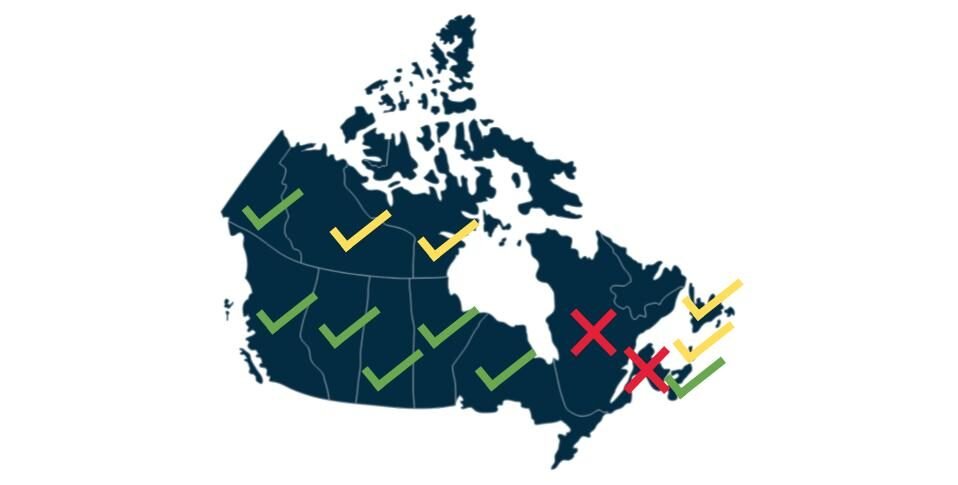
Early reading screening requirements vary across Canada. Some provinces have clear policies that require schools to screen all children in specific grades. Others have softer recommendations or are gradually phasing in screening mandates. However, a few provinces have not yet committed to introducing universal early reading screening.
Here’s what parents across Canada should know for the 2026–27 school year:
British Columbia
B.C. is currently developing a provincial early reading screening tool. This new tool will be mandatory next year. This year, districts are required to screen all kindergarten through grade 3 students and are encouraged to use one of the evidence-based tools recommended by the province. However, during this transition period, some districts continue to use reading assessments that are not evidence-based. This means the quality of screening data varies significantly across B.C.
We encourage parents to ask their school district which screening tool it is using and to write to their new MLA, urging them to ensure that all school districts are ready to implement the new provincial reading screener next fall.
Alberta
Alberta requires early literacy screening from Kindergarten to Grade 3, with schedules varying by grade. The province provides screening measures and a list of other recommended tools. However, implementation of screening in Alberta appears inconsistent. More than half of Alberta teachers report continuing to use levelled reading assessments in addition to the required screening measures. This is understandable, as teachers likely want to hear children read connected text and current screening measures do not provide assessments with text-level reading. However, continuing to use these less-reliable, time-consuming assessments takes valuable time away from instruction. Survey respondents also point to challenges with training and a lack of release time to screen.
We encourage parents to write to Alberta’s Minister of Education, Demetrios Nicolaides, to ask that the province commit to better supporting teachers with screening, and providing clearer guidance to school districts around the importance of de-implementing level-based assessments. The goal should be to provide teachers with the information they need to guide instruction, replace outdated assessments, and preserve valuable instructional time.
Saskatchewan
Saskatchewan has introduced early reading screening for all students in Kindergarten to Grade 3 this school year. We encourage parents to ask their child’s teacher which screening tool was used, what their child’s results were, whether they met the expected benchmarks, and what the focus of instruction will be in the coming months to help them stay on track or address gaps in foundational reading skills.
Screening is still very new in Saskatchewan. We encourage parents to write to Education Minister Everett Hindley to thank him for the government’s commitment to early reading screening and ask how the province will ensure that all school divisions use tools that are evidence-based, valid, reliable, efficient and predictive of future reading difficulties. Parents should also ask how the province will ensure that screening results trigger mandatory next steps for children identified as being at risk.
Manitoba
Manitoba has a new law requiring universal early reading screening, but implementation is still in the early stages and varies across its 37 school divisions. The province requires screening tools to be evidence-based, valid, reliable, efficient and predictive of future reading difficulties, but has left the choice of tools to individual divisions rather than providing a recommended list.
We encourage parents to ask which tool their school division is using. If you’re unsure whether it meets provincial standards, contact Dyslexia Canada. We’re happy to help. If your division is using a tool that doesn’t meet these standards, we encourage you to write to your MLA and Education Minister Tracey Schmidt to ask how the province will ensure that all school divisions are using screening tools that meet its requirements.
Ontario
Ontario requires all publicly funded schools to screen students in Year 2 of Kindergarten, Grade 1 and Grade 2 using an approved, evidence-based early reading screening tool.
Under Policy/Program Memorandum 168, all students must be screened in the fall. Only students who do not meet the fall benchmark must be screened again in the winter. Schools are also required to share individual screening results with parents on their report cards. However, Ontario has not established clear provincial policies for what schools must do when screening indicates that a child is at risk. Parents should ask for their child’s fall screening results and, if they indicate risk, ask what instruction or intervention will be provided.
Parents should also know that meeting the benchmark in the fall doesn’t guarantee a child will remain on track. Benchmarks increase throughout the year as reading expectations grow. While Ontario’s policy doesn’t require a second screening for every child, many school boards conduct one for all students in the winter, as this is considered best practice.
Ask your school board how often they screen all students. If they are only screening all students once per year, we encourage you to write to your school board and Ontario’s Minister of Education, Paul Calandra, to ask that the province’s screening policies be strengthened to reflect best practices.
Quebec
Quebec does not have a province-wide requirement for universal early reading screening using an evidence-based tool. Screening and assessment practices vary across schools and school service centres.
We encourage parents to write to Quebec’s Minister of Education, Joël Arseneau, to ask the province to introduce universal, evidence-based early reading screening in all schools so children at risk for reading difficulties can be identified and supported early.
New Brunswick
New Brunswick does not require universal evidence-based early reading screening. Instead, schools use the province’s locally developed Early Grades Literacy Assessment (EGLA), which is not a validated screening tool and cannot reliably identify children at risk for future reading difficulties.
We encourage parents to write to Education Minister Claire Johnson and ask the province to introduce universal early reading screening using valid, reliable, evidence-based tools.
Nova Scotia
Nova Scotia requires all students in Primary to Grade 2 to be screened twice a year using Acadience Reading, a well-researched, evidence-based screening tool. We encourage parents to ask their child’s teacher about their screening results, whether their child is meeting expected benchmarks, and what the focus of instruction will be in the coming months to help them stay on track or address gaps in foundational reading skills so they can meet the benchmark at the next screening.
Prince Edward Island
Prince Edward Island does not yet require universal early reading screening, but is piloting screening in some schools. We encourage parents to ask their child’s school whether screening is taking place and to write to Education Minister Robin Croucher to encourage the province to introduce universal, evidence-based early reading screening in all schools next year.
Newfoundland and Labrador
Newfoundland and Labrador is introducing universal early reading screening using Acadience Reading, a valid, reliable, evidence-based tool. This year, all Kindergarten and Grade 1 students will be screened, and we expect Grades 2 and 3 to be added next year.
We encourage parents to ask their child’s teacher about their screening results, whether their child is meeting expected benchmarks, and what the focus of instruction will be in the coming months to help them stay on track or address gaps in foundational reading skills.
We also encourage parents to write to Education Minister Paul Dinn to thank him for introducing screening and encourage the province to expand the program in the coming years.
Yukon
Yukon has two school governance models: schools operated by the First Nation School Board (FNSB) and schools run directly by the territorial government.
The FNSB has been screening students for several years and sends detailed letters home explaining the screening measures used, each child’s results, and the focus of instruction going forward. This is one of the best examples of parent communication we’ve seen.
Territory-run schools are also introducing screening this year. We encourage parents in these schools to ask their child’s teacher about screening results and what the next steps will be for instruction. We also encourage parents to write to Education Minister Scott Kent to thank him for the progress Yukon has made on early reading screening and ask for more details about the territory’s implementation plan.
Northwest Territories
The Northwest Territories has announced plans to move forward with early literacy screening, but does not yet have a territory-wide screening policy. We encourage parents to ask their child’s teacher whether their child has been screened and what the results show.
We also encourage parents to write to Education Minister Caitlin Cleveland to ask the territory to introduce universal, evidence-based early reading screening in all schools.
Nunavut
Nunavut has developed early literacy assessment tools, including tools designed for its language and educational context. However, a territory-wide requirement for universal evidence-based reading screening has not been confirmed.
Parents should ask what assessments are used in their child’s language of instruction and how reading difficulties are identified.
We encourage parents to write to Education Minister David Akeeagok to thank him for the progress Nunavut has made on early reading screening and ask for more details about the territory’s implementation plan.
Five questions every parent should ask
Whether screening is mandatory in your province or not, you can ask your child’s teacher about their reading development.
Here are five questions to get the conversation started.
1. Has my child been screened, and which tool was used?
Not all reading assessments are reliable screening tools. Ask for the name of the assessment. Evidence-based screeners include Acadience Reading, DIBELS 8, and Acadience Reading Français, among others. But not all tools that call themselves a screener are evidence-based. If you are unsure, reach out to our team, and we can help you determine whether the tools used in your school are evidence-based, valid, and reliable.
2. Can I see my child’s screening results?
Ask for the actual scores, not just a general statement that your child is doing fine. Screening results should help you understand which skills your child has developed and which skills may need more attention. If you need help understanding what the results mean, our team is here to help.
3. Is my child meeting the expected benchmarks?
Evidence-based screening tools use benchmarks to identify children who may be at risk for reading difficulties.
Ask whether your child is meeting those benchmarks. If not, ask how far below the benchmark they are and what that means.
4. When will my child be screened again?
Screening should not be a one-time event. Many screening tools are designed to be used at the beginning, middle, and end of the school year.
Ask when your child will be screened again and how their progress will be tracked.
5. If my child is at risk, what happens next?
This is the most important question.
If screening shows that your child is not meeting the expected benchmarks, the school should work to understand which skills your child needs support with and plan instruction to target those skills.
Ask which skills your child needs to work on, what instruction will be provided to support them, how and when this will happen, and how the school will know whether it is working.

Want to learn more?
Our free Dyslexia Canada Parent Handbook explains how reading develops, what effective reading instruction looks like, and how to work with your child’s school to get the right support.
It includes more practical questions to ask teachers, information on reading intervention, and advice for parents concerned about their child’s progress.
Remember, important changes are underway, but change can be hard
Screening is still new in many schools. Ask questions and insist on answers, but be patient with teachers, many of whom are still learning how to put these new practices into place. If you live somewhere that hasn’t introduced screening, or where the guidelines don’t go far enough, keep advocating for change. We have made enormous progress over the past several years. We need continued advocacy from both parents and educators to ensure every child gets the support they need to learn to read.
"Never doubt that a small group of thoughtful, committed citizens can change the world; indeed, it’s the only thing that ever has.”
- Margaret Mead