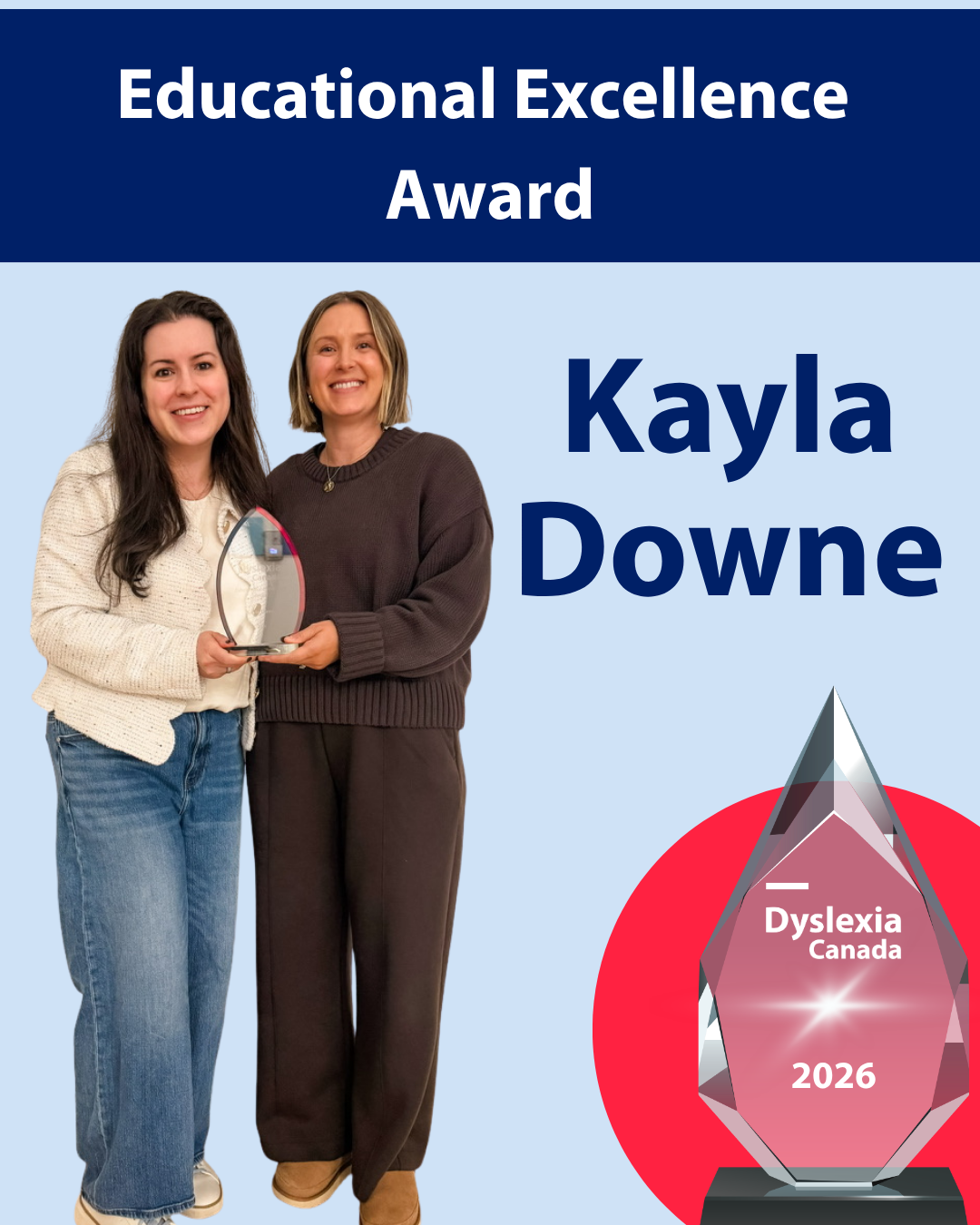
Each year, Dyslexia Canada’s Educational Excellence Awards recognize those making a meaningful difference in the lives of students with dyslexia. These awards celebrate educators who embrace evidence-based practices, prioritize early identification, and work to ensure that every student has the opportunity to learn to read.
2026 marks Dyslexia Canada’s milestone tenth anniversary, and it is an honour to celebrate with this year’s remarkable group of award winners from across Canada.
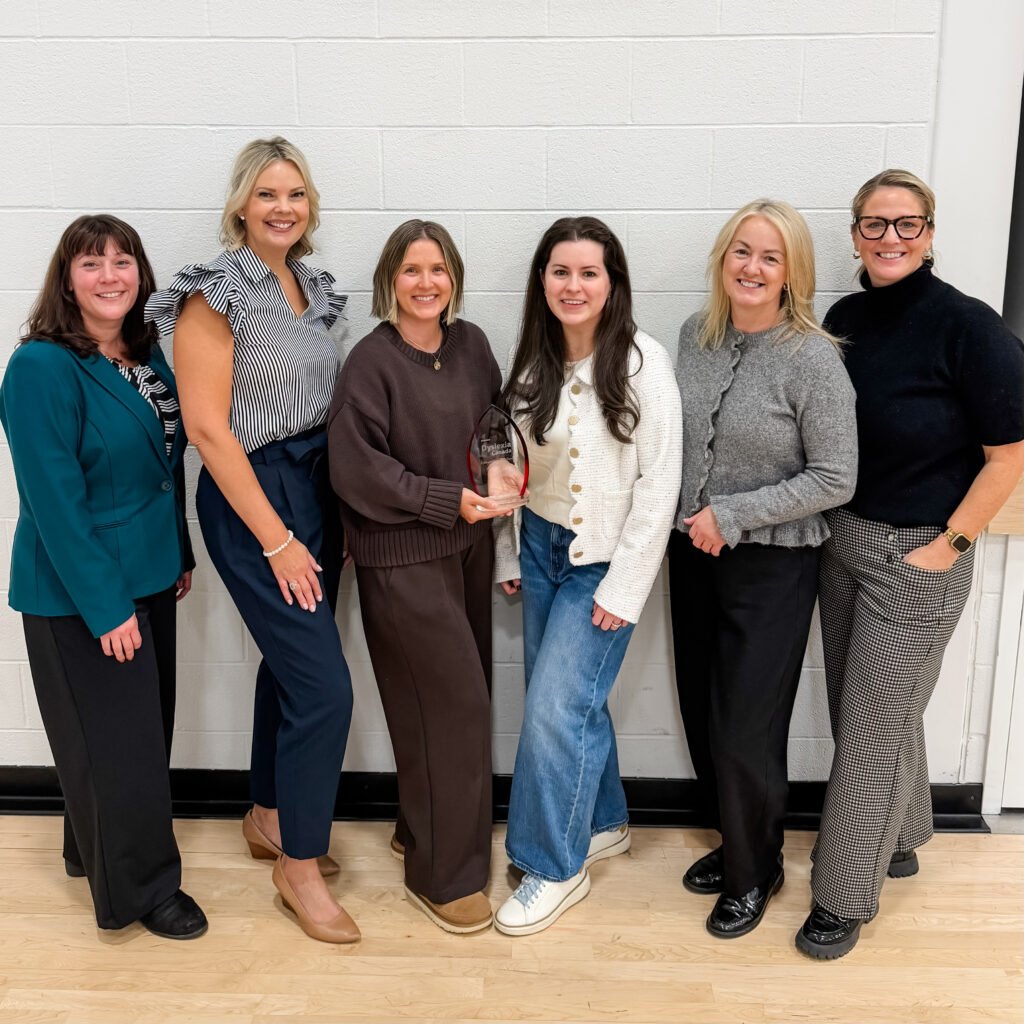
For Kayla Downe, strengthening literacy instruction means supporting both the students who need additional help and the educators who teach them every day. Last year, as an Academic Support Teacher at Cuffman Street Elementary in New Brunswick, she helped bring together carefully planned interventions and strong classroom instruction. Now an Instructional Lead Teacher, she continues to lead this work at Cuffman while helping other school teams learn from its approach. Her leadership and dedication to helping every student thrive have earned her a 2026 Dyslexia Canada Educational Excellence Award.
As an Academic Support Teacher, Kayla provided targeted interventions for students requiring additional support from Kindergarten to Grade 5. She approached this work with compassion, expertise, and a deep belief in every child’s potential. Alongside these interventions, she worked with classroom educators to strengthen Tier 1 instruction, helping ensure that high-quality, structured literacy was accessible to every student.
Kayla has been instrumental in building a responsive, evidence-based approach to literacy instruction by implementing a Multi-Tiered System of Supports (MTSS) framework. She sees her role as removing barriers and empowering classroom educators to provide effective instruction.
Cuffman Street is also helping lead the way in evidence-based reading assessment by piloting universal screening. While universal screening is not yet a provincial requirement in New Brunswick, the school is exploring ways to support earlier identification and a more coordinated approach to instructional improvement. Kayla has observed that conversations grounded in data can shift how educators think about literacy instruction, helping the school team identify needs and align their response.
That alignment extends to the language, materials, and routines students encounter across classroom instruction and additional support. By coordinating their approaches and increasing practice on targeted skills, educators give students repeated opportunities to strengthen their learning within a consistent instructional environment.
The school’s data reflect encouraging progress. Kindergarten to Grade 2 cohort data has shown a risk reduction of up to 27%, and most Kindergarten classes have 70% to 80% of students on track. While Kayla’s leadership has helped build the conditions for this work, she credits classroom educators with putting these practices into action every day. Seeing this progress has reinforced her commitment to making effective, coordinated instruction available to students from the beginning.
Now serving as a demonstration school, Cuffman Street is opening opportunities for other school teams to observe this work in practice. In her role as Instructional Lead Teacher, Kayla supports that learning and helps teams bring what they learn back to their own schools. Her leadership continues to grow from the shared work at Cuffman, connecting educators across schools as they strengthen their own approaches to literacy instruction.
Her commitment to collaboration also includes parents and caregivers. Kayla recognizes the importance of involving families in the structured literacy approach and showing them how the whole school team is working together to support their child. Conversations about a child’s literacy development help families understand the support in place and feel that their child is seen.
For Kayla, this work connects classroom practice with broader advocacy. She recognizes that systemic changes within schools, districts, and across the province can strengthen literacy outcomes for all. Supporting other school teams is another way she is helping that work move forward.
Signe Williams, Subjects Coordinator K-5 Literacy for Fredericton & Oromocto in Anglophone School District West, describes the value of Kayla’s approach: “Educators like Kayla remind us that when evidence-based instruction, early identification, and compassionate leadership come together, the future for struggling readers can be transformed one student, one classroom, and one school at a time.”
The impact of this shared approach is evident in how students experience their classrooms. As Kayla explains, “the kids feel good. They know what to expect when they cross through that classroom door, they know the language, they know the routines, and it has just made the whole classroom environment calmer.”
At Cuffman Street, strengthening literacy instruction is helping students build both their skills and their confidence. Through Kayla’s leadership and the daily work of classroom educators, a coordinated approach to instruction is creating a school where students feel supported, capable, and ready to learn. As other school teams visit and learn alongside them, Kayla is helping that work reach more educators and students.
Statements of Support
Person’s name and title
Lorem ipsum dolor sit amet, consectetur adipiscing elit. Ut elit tellus, luctus nec ullamcorper mattis, pulvinar dapibus leo.