

Planning interventions
It’s important to recognize that since struggling readers have a skill gap, they need to make faster progress than their peers to close the gap and become skilled readers. Interventions must be well-planned and closely monitored, with lots of parent involvement. To ensure your child’s skills make good progress, stay actively involved in planning intervention and tracking how well it is working for your child.
Using an outcomes-driven model for intervention
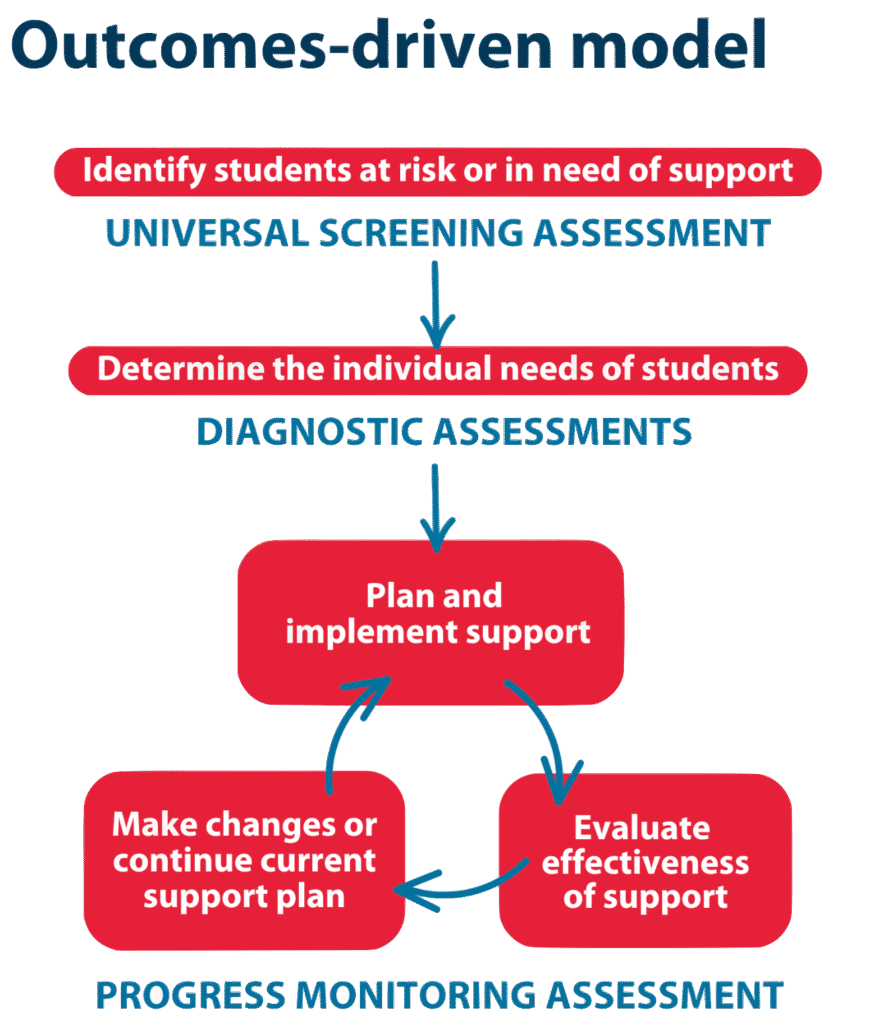
An outcomes-driven model (Good et al., 2002) for reading intervention is like following a step-by-step plan to help students who might struggle with reading. Here’s how it works:
Identifying students in need of support
First, all students are given a quick universal screening assessment to see if they might have trouble with reading. This helps educators find out which students need extra help early on.
Determining a student’s individual needs
Once students who need extra support are identified, educators use diagnostic assessments to better understand their specific learning needs.
Planning and implementing support
With this information, teachers create a support plan that focuses on the areas where the student needs the most help. This plan is then put into action, with the student receiving targeted lessons and practice.
Monitoring the plan
As the student receives intervention, teachers regularly check how well the student’s skills are doing using short progress monitoring assessments. These quick assessments allow everyone to understand if the intervention is working.
Making changes as necessary
If the student isn’t improving as expected, the plan is adjusted. This might mean changing the size of the group, the frequency of lessons, or focusing on different skills to make sure the student keeps moving forward in their reading skills. This model helps ensure that every student gets the right kind of help they need to become a successful reader. See the illustration below for an overview of how it all fits together.
Key questions to ask about intervention
Who will be supporting your child?
Identify whether the intervention will be delivered by the classroom teacher, a resource teacher, or a special education teacher. Consider the training and experience of the interventionist to ensure they are equipped to meet your child’s needs.
What are the goals?
Specify the skills being targeted. Define the outcome goal for each skill: what level of performance do we want to see for the child, and when do we expect them to reach that goal? Will reaching this goal narrow or close the gap for your child?
What resources are being used?
Will a standard lesson plan or program be used? Ask about the research supporting the chosen materials, especially their effectiveness with students who have similar learning profiles as your child.
How much support will your child get?
Clarify how often support will be provided, how many minutes each session will be, and whether this time is shared with other students.
Where does the intervention take place?
Is this in the classroom, outside the classroom in a resource or special education room, at a tutoring centre, or at home?