

Effective reading intervention
Strong structured literacy instruction in the classroom helps all students learn to read, but some students, including those with dyslexia, need more support. These students also need reading intervention that will give extra instruction and practice to help them develop specific skills. Intervention should follow the same structured literacy approach as instruction, but with more intensity. Intensity can be increased in several ways, including a smaller group size, more minutes of instruction, and additional opportunities to practice.
When should students start intervention?
Students who struggle with reading should receive reading support as early as possible – ideally in kindergarten or grade 1.
Why is early intervention important?
While it is never too late to improve your child’s reading skills, early interventions take less time, can be less intensive, and can prevent the harmful impacts that reading difficulties can have on self-esteem, mental health, and academic success.
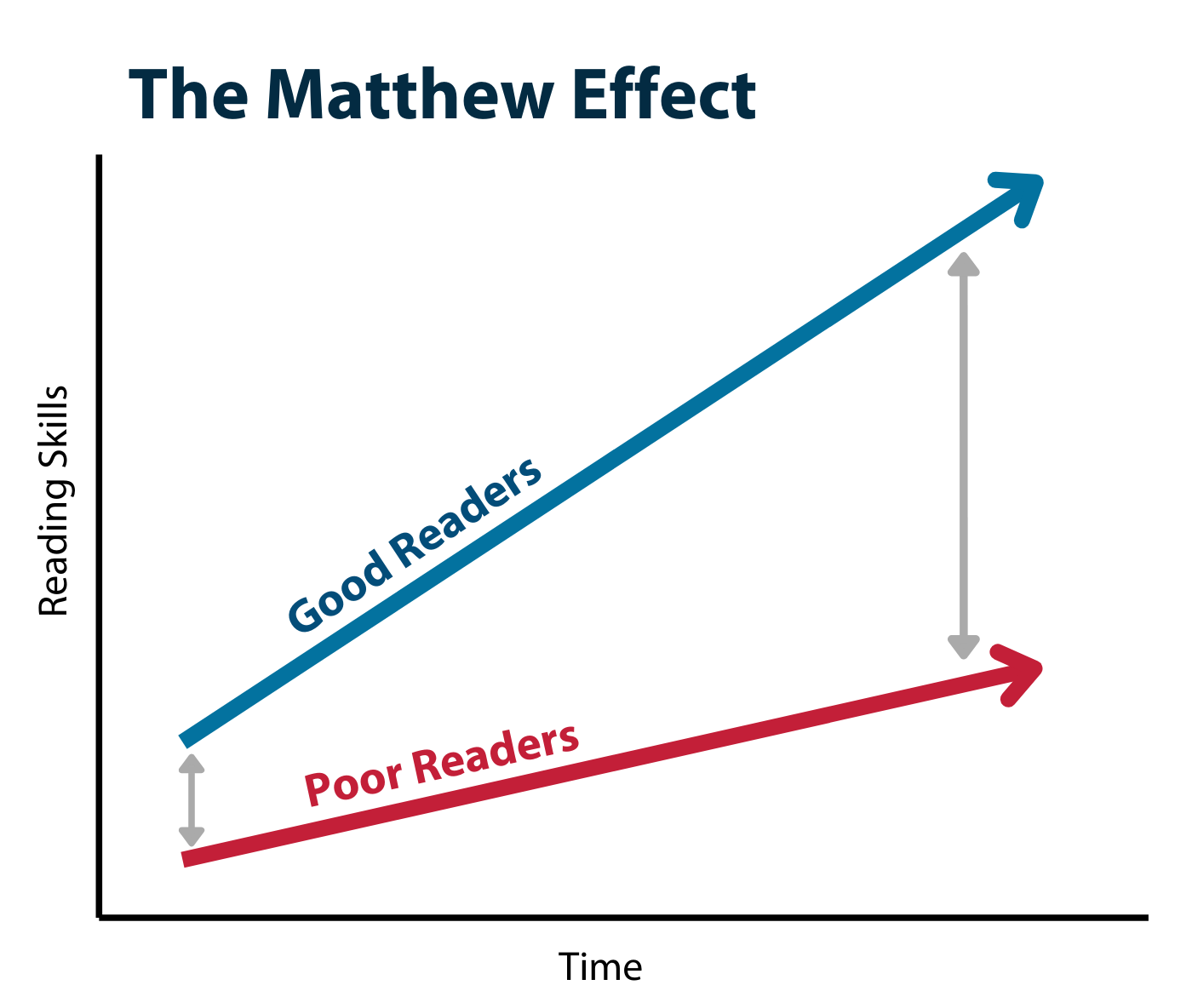
The “Matthew Effect” was coined by Keith Stanovich (1986) and is the concept that the “rich get richer, and the poor get poorer.” In reading, this term is used to describe how the gap between strong and struggling readers gets wider over time. When children are good at reading, they tend to read more, which helps them get even better. But if a child struggles with reading, they might avoid it, which means they miss out on chances to improve. As a result, good readers keep getting better, while struggling readers fall further behind. The best way to close this gap is with early, effective interventions.
When and where does intervention happen?
Reading interventions look different based on your child’s age, learning needs, and school setting. While students have a right to learn to read at school. intervention can happen in school, either in the regular classroom or in a pull-out setting with a resource teacher, or outside of school with a structured literacy tutor. No matter where intervention happens, good planning is essential to make sure the support is effective and coordinated. Learn more on our planning page.
Maximizing the impact of intervention
It is important to ensure that the intervention your child is receiving uses the most effective strategies to close the skill gap as quickly as possible. Here are some examples of what makes a reading intervention effective and what doesn’t work as well:
Phonemic awareness intervention
Phonemic awareness is the ability to identify and work with the individual sounds in words. It is necessary for decoding and spelling words. Many children with dyslexia struggle with phonemic awareness.
The two most important phonemic awareness skills are blending and segmenting. Blending means pushing sounds together to make a word, and segmenting means pulling the sounds in a word apart so that it can be spelled.
Phonemic awareness instruction and intervention should be brief, with the goal of having students move on to decoding as quickly as possible.
Decoding and spelling intervention
Students with dyslexia often need intervention to help them develop decoding and spelling skills. If a student is struggling to decode words, they may compensate by memorizing or guessing words, which can prevent them from reading fluently. Intervention for decoding and spelling provides additional instruction on letter-sound correspondences (phonics), spelling patterns, and the meaningful parts of words like prefixes and suffixes while also providing plenty of additional practice using this knowledge to read and spell words.
Fluency intervention
Fluency refers to the ability to read words effortlessly and accurately, allowing the reader to devote all their attention to thinking about what they are reading.
It depends on strong decoding skills; students who have good decoding skills but are slow or inaccurate in their reading require fluency intervention.
Fluency intervention should focus on accuracy and expression before speed. Reading out loud is more effective for developing fluency than silent reading.
Comprehension intervention
Comprehension is the goal of reading. For many students with dyslexia, comprehension difficulties stem from trouble reading texts accurately and fluently. As Dr. Anita Archer says, “There is no comprehension strategy powerful enough to compensate if a student cannot read the words.” Once students can read words automatically without thinking too much about how to sound them out, they can focus their energy on understanding the story or information they’re reading.
If a child is struggling with comprehension, their reading fluency should be assessed. If they can read fluently but are still having trouble understanding what they read, they may need additional support with reading comprehension.