
What is dyslexia?
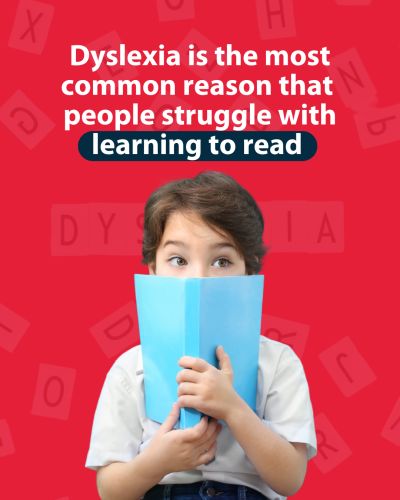
Dyslexia is a learning disability that makes it harder to read words accurately and fluently. Students with dyslexia may also face challenges in spelling and writing in addition to reading difficulties. With the right support and accommodations, these students can thrive academically and reach their full potential.
How common is dyslexia?
While estimates vary, dyslexia can impact:
- 5 – 20% of the population
- Approximately 750,000 children in Canada
- 1 to 4 children in every Canadian classroom
How does dyslexia affect people?
Individuals with dyslexia have difficulty learning to read words accurately and/or automatically. They can also have difficulty
- Reading aloud fluently, with expression at an appropriate rate
- Reading and understanding grade-level text
- Spelling words correctly
- Using conventional grammar
- Expressing ideas in writing
Why isn’t the word dyslexia used in my school?
While dyslexia is very common, the word is not frequently used in the Canadian education system. Instead, it is often referred to by the more general terms “Specific Learning Disorder” or “Learning Disability.” In either case, if the specific challenges are related to reading words accurately and/or quickly, it is dyslexia.
In the 1960’s, parent advocates fought to establish the Learning Disability concept to ensure their children with dyslexia had the legal right to accommodation and support at school. Learning Disability is now a legal term defined in provincial policies and used in most schools.
Specific Learning Disorder is a medical term listed in the Diagnostic and Statistical Manual of Mental Disorders (DSM-5). Private psychologists often use this term in assessments. The DSM-5 guidelines for psychologists state that dyslexia may be used as an alternative term for problems with word reading fluency or accuracy, decoding, and spelling.
Can I ask to have the term dyslexia used at school?
Using the term dyslexia is a personal choice. It has the advantage of being more specific, making it easier to understand which interventions and supports a child needs. Many people do not like the terms “disability” or “disorder” because they feel dyslexia is a difference in how they learn, not a defect or inability to learn. Ultimately, the terms you use are up to you, and the school should respect you and your child’s choice. The Ontario Human Rights Commission noted in the Right to Read Report that “under the Code, people’s preferred self-identification should be respected and recognized” and recommended that the province of Ontario officially recognize and use the term dyslexia where appropriate.