 While BC has been working to shift practice, the province has not yet removed cueing strategies from the curriculum and instructional guidance.
 In the spring of 2025, BC released the K-4 Foundational English Language Arts Learning Progressions. This document serves as a high-level sequence for foundational skills and covers the essential aspects of early structured literacy instruction. The province indicated that this document provides additional details and clarity to help teachers implement the curriculum, but does not replace it.
 British Columbia is in the process of updating its instructional approach, and at present, guidance is mixed. The province’s main document for early literacy, Learning in the Primary Years, does not reflect the principles of structured literacy. It does not include recommendations for systematic and explicit instruction in foundational skills, and it promotes strategies characteristic of a “balanced literacy” model. For example, there is no mention of direct instruction in letter formation, and the document cautions against the use of scripted programs, even though such programs can help ensure instructional consistency.
However, there are encouraging signs of change. The Provincial Outreach Program for the Early Years (POPEY) has recently removed many outdated materials from its site and has begun sharing more evidence-informed guidance and resources with educators.
We are hopeful that BC will continue on this path and work collaboratively with partners to ensure all educators are supported with clear, research-aligned instructional guidance.
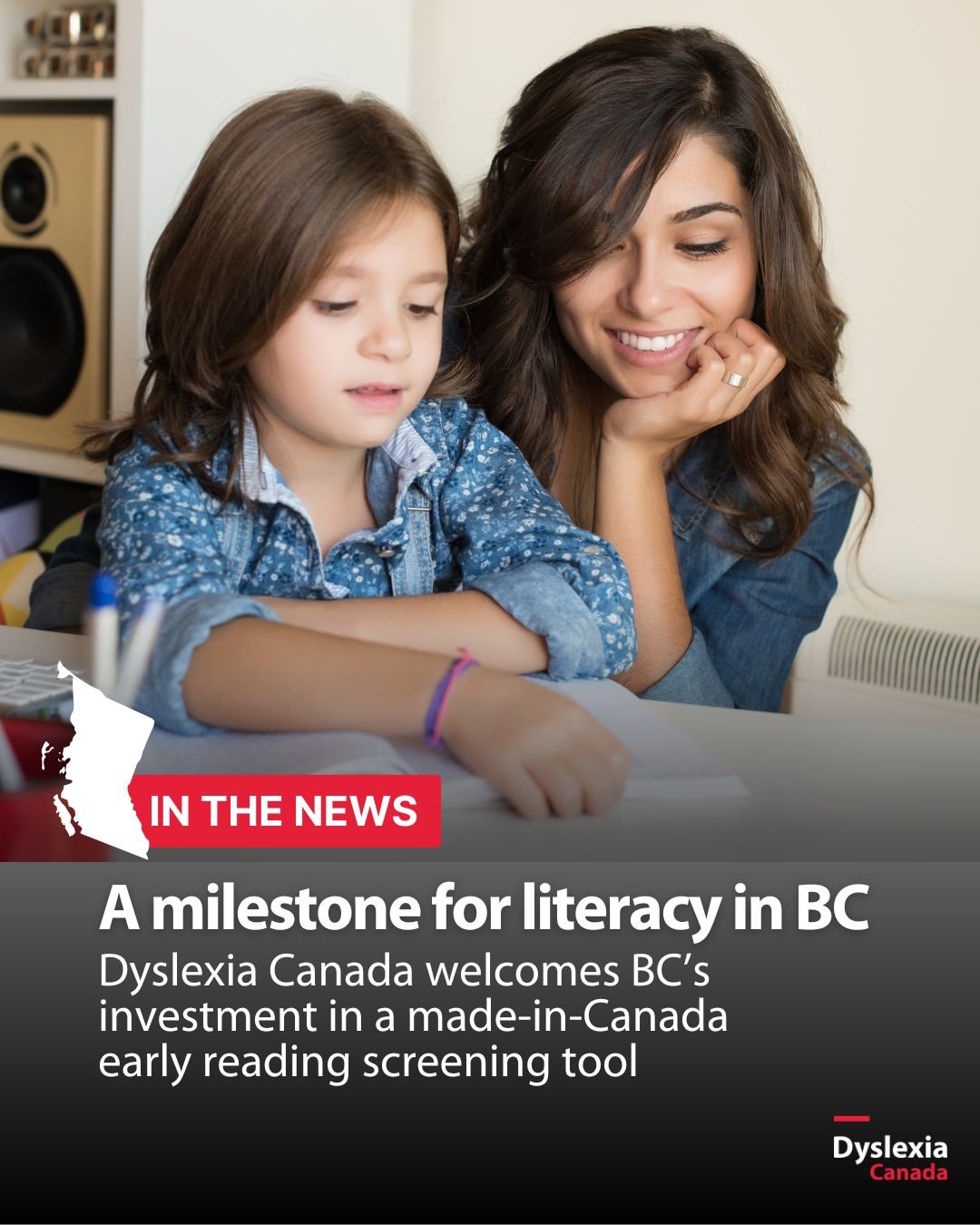
In April 2024, British Columbia committed to implementing early literacy screening for all students, a critical step toward improving reading outcomes across the province. We were honoured to be invited to join the Premier and Minister of Education in making this important announcement. This commitment marks a meaningful move toward earlier identification of, and support for, students at risk for reading difficulties.
In June 2025, BC released guidelines requiring school districts to use screening tools that are evidence-based, valid, and reliable. The province provided a list of tool specifications and a list of recommended screeners. Districts must either select a tool from the approved list or choose another that meets the same criteria. In September 2025, BC announced plans to develop a research-based, valid and reliable screening tool in partnership with Canadian researchers. The province’s Frequently Asked Questions stands out as a national model, offering unparalleled clarity on screening. Few other provinces provide such direct, plain-language guidance for districts and educators.
While BC has announced plans for screening Kindergarten to grade 3 students, currently only Kindergarten students must be screened in the 2025-2026 school year.
Screening is a new practice in BC, and the province has not yet established policy or issued guidance outlining how the data should inform intervention decisions. Establishing clear policy in this area is essential to ensure that students consistently have access to timely and effective intervention and support.
There is currently no requirement in BC for schools to use evidence-based interventions. Clear guidance in this area is critical to ensure students receive instruction that is proven to work, and we hope to see the province establish this expectation and support its implementation.
Schools are not currently required to track how interventions are delivered. Such tracking is important for accountability and to ensure that students receive consistent and effective support. We hope the province will introduce a policy in this area and support its implementation.
There is no requirement for schools in BC to conduct regular progress monitoring for students receiving intervention. Making this mandatory would help educators adjust instruction and ensure that students are on track. We hope to see this added as implementation continues.
Currently, there is no policy in BC requiring schools to share information about intervention and progress monitoring with parents. Transparent communication is essential to building trust and ensuring families can advocate effectively for their children. We hope the province will introduce clear expectations in this area.
BC does not currently collect intervention outcome data at the provincial level. System-wide data collection is vital to evaluate what’s working and to improve practices over time. We hope the province will move in this direction as screening and intervention practices evolve.
There is currently no specific requirement that teacher candidates in BC take coursework focused on the science of how students learn to read. Ensuring teachers have a strong understanding of reading development is critical to improving literacy outcomes. We hope to see this included in licensing standards in the future.
While teachers must complete a course in inclusive education, there is no requirement that this course include specific content on dyslexia. Considering the prevalence of dyslexia and the unique instructional needs of affected learners, we hope BC will strengthen licensing standards to ensure all teachers are prepared to support students with dyslexia.
While the professional standards for teacher education in BC do not explicitly reference the components of structured literacy, they do include two statements indicating that universities must prepare future teachers to deliver the provincial curriculum. With the release of BC’s new learning progressions and the province’s shift toward evidence-based instruction, we hope faculties of education will move quickly to update their courses.
As part of its move toward evidence-based instruction, BC has begun providing additional funding to support professional development for educators. This investment is an important step in equipping teachers with the tools they need to improve literacy instruction across the province.