

How to know if intervention is working
Once you have a good intervention plan developed, your attention can shift to making sure the intervention provided is working for your child. This involves monitoring both the implementation of the plan (is the plan being followed?) and your child’s progress (is it working?).
Evaluating implementation: Tracking fidelity
To understand if intervention is helping your child, it’s important to track how it is being implemented. In reading interventions, fidelity refers to whether or not the instruction is delivered the right way. Most commercial programs will have guidelines for how the program should be used. This might include a standard lesson plan with structured scripts for teachers to explain new content and correct errors, or information on how often the intervention should be delivered and for how long.
Tracking intervention delivery is important for understanding whether slow progress is due to the intervention not being the right fit for the child or if it is because the intervention is not being delivered correctly. Knowing this is important when deciding if changes need to be made to the intervention itself or to how it’s being given.
How to track implementation
In schools, the interventionist should record how many times your child receives the intervention. Ideally, they would also have regular check- ins and observations from a coach or administrator to help ensure they are delivering the intervention as intended. In reality, there is often little supervision or support for intervention teachers and no guarantee that they are tracking how often intervention is happening. You could keep your own log by asking your child each day if they received intervention, and you can also request weekly updates from the teacher letting you know how many sessions happened in the week. If the teacher is using a published program, you can ask them to share the last lesson number that they completed.
Understanding your child’s progress
When receiving intervention, your child should have regular progress monitoring assessments. These short assessments help you see how well your child is improving and if they are on track to reach their goal on time. With frequent progress monitoring data, you can decide if the intervention is working, needs to be stronger, or can be scaled back.
What tools can be used for progress monitoring?
Many evidence-based screening tools used in schools also include materials for progress monitoring. These tools are valid and reliable and provide objective information to understand progress.
Assessments of “reading levels” like PM Benchmarks and the Benchmark Assessment System are not valid and reliable and should not be used for progress monitoring.
How often should progress be assessed?
Progress monitoring assessments are very brief (1 to 3 minutes). Because they can be completed so quickly, these simple measures can be done weekly if necessary.
Working with the school or tutor
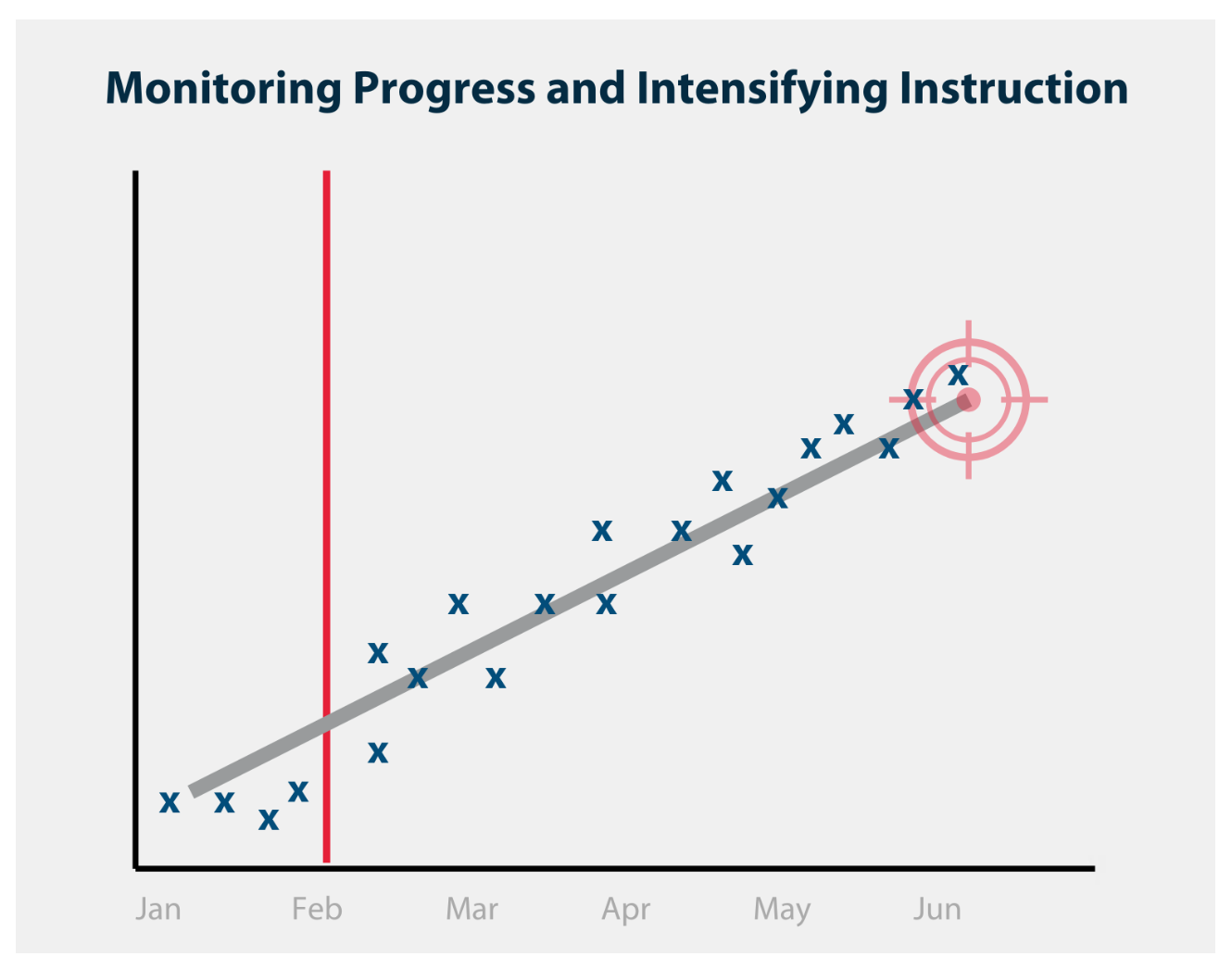
While progress monitoring is best practice, you may have to ask the school or intervention provider to start doing this and to share the data with you. Ideally, every child who is receiving intervention would have a chart like the one below to ensure that everyone involved can clearly understand the effectiveness of the intervention being provided.
What to do if the plan isn’t working
When your child is not making enough progress, it’s important to act quickly. Early intervention can make a big difference. If you notice that progress is slow, don’t just accept it. Even if it’s hard to convince the school to make changes, be persistent. Here’s how you can help improve the intervention:
Strength
Is the intervention using a program or approach that has been researched with students with intensive learning needs? Can we use a program or approach that has stronger research support?
Dosage
How much intervention has the child received? Can we increase the number of sessions per week or the duration of each session, or decrease the number of students in the group to give the child more opportunities to practice?
Alignment
Does the intervention align with the student’s specific needs? Can we more closely target the specific skills?
Application
Are we giving students opportunities to apply skills in reading and writing? Is classroom instruction aligned with the intervention, so students have a consistent approach?
Behavioural support
Does the intervention integrate behavioural support to teach and reinforce positive behaviours, maximizing opportunities for student skill development?
Individualization
Is the intervention adjusted to the student’s needs based on frequent progress monitoring data?
– Adapted from National Center on Intensive Intervention
Don’t settle for minimal progress. The sooner and more intensively a child receives the right support, the better the chances of improvement. Remember that you are your child’s best advocate, so keep pushing for the best intervention and make sure it is working effectively.